What Is the Purpose of a Resume Today
- Alex Khamis

- Nov 24, 2025
- 8 min read
The purpose of a resume isn't to get you a job. It's to get you an interview. Think of it as a marketing document, not a historical record. Its only goal is to answer one question: "Is this person worth my time?"
Your Resume Is a Movie Trailer
A good movie trailer hooks you with just enough action and plot to make you want to see the whole film. It doesn't show every single scene.
Your resume works the same way.
It’s not your life story. It's a sales pitch crafted to prove you can solve a company's problem. You need to create a compelling story that leaves them wanting more—which means calling you for an interview.
The Two Audiences You Must Impress
Your resume has to win over two very different audiences: first a robot, then a human.
The Applicant Tracking System (ATS): This software scans your resume first for keywords and proper formatting. Fail this test, and a human will never see it.
The Hiring Manager: This is the person who decides. They're busy, skeptical, and looking for reasons to put your resume in the "no" pile.
For more strategies on navigating the modern job market, check out these job search tips that can give you an edge.
Over 80% of resumes are rejected before they get a serious look. On average, only 1 in 10 resumes actually reaches a hiring manager.
This next stat shows just how fast that initial screening is.
This brutal reality is why your resume must be sharp and focused. Recruiters spend an average of just 6-8 seconds on a first glance. To learn more about making those seconds count, read our deep dive on what recruiters look for in resumes to get hired.
Your Resume Is a Screening Tool, Not an Autobiography
Let's get one thing straight: your resume’s real job isn't to get you hired. Its job is to get you an interview. It's like a bouncer at a club. Its main function is to filter people out, not let everyone in.
That’s the tough reality. When a single job gets hundreds of applicants, managers look for reasons to say ‘no’ just to make the pile manageable. A generic resume that lists job duties is the fastest way to get cut.
The whole point is to survive that brutal first cut. It’s not about telling your life story. It's about getting past the velvet rope. Every word has to earn its place.
Give Them a Reason to Say Yes
Your resume needs to give a recruiter zero excuses to toss it and every reason to put it in that tiny "yes" pile. It's a highlight reel, not the full game tape.
This means focusing only on wins and skills that matter for the specific job you want right now.
A resume isn't a list of your job duties. It's a marketing document showcasing your best accomplishments to prove you can solve the employer's problems.
To pull this off, your resume must be:
Targeted: Customized for the specific role and company.
Concise: Focused on high-impact results, not a long list of tasks.
Skimmable: So easy to read that a busy recruiter gets the gist in under 10 seconds.
Getting this wrong is one of the biggest resume mistakes and how to fix them. Each mistake, no matter how small, gives a recruiter an easy reason to move on to the next person.
Ultimately, you need to learn how to write a resume that wins interviews by grabbing attention and getting past the automated screening systems.
Passing the Robot Test Before a Human Sees It
Here’s a hard truth: before a person ever sees your resume, it has to get past a robot. In this critical first stage, the purpose of your resume is purely technical. It has to survive a machine’s scan.
These robots are called Applicant Tracking Systems (ATS). Companies use this software to manage hundreds of applications. The ATS isn’t smart. It doesn’t understand your career story. It just scans for keywords and formatting.
How to “Beat" the ATS
The ATS isn’t some scary black box. It’s a predictable system. If you ignore how it works, your resume goes straight to a digital trash can. A hiring manager will never even know you applied.
You have to optimize for the machine before you think about the human. This means keeping your resume’s structure simple and predictable.
Think of the ATS as a bouncer with a list. If your resume doesn't have the exact words it's looking for, you're not getting in. It’s that simple.
Getting past this gatekeeper isn't about hacking the system with corporate buzzwords. It’s about making your resume easily readable for what is, frankly, pretty basic software.
Here are the non-negotiable rules for getting past the ATS:
Mirror the Job Description: Find keywords in the job posting and use those exact phrases. If it asks for "Project Management Professional (PMP)," write that out.
Use Standard Fonts: Stick to classics like Calibri, Arial, or Times New Roman. Fancy fonts can become an unreadable mess when the ATS tries to parse them.
Avoid Complex Formatting: Forget about tables, columns, text boxes, or logos. This kind of formatting often confuses the software, causing it to miss important info.
If you want a deeper dive into how these systems work, get more details on how Applicant Tracking Systems are explained and why they’re so important.
Proving Your Value with Results Not Responsibilities
Once your resume gets past the robots, it faces a real test: a human. At this stage, your resume has one job. It must prove your value, quickly and powerfully.
Nobody cares that you “managed projects.” They want to know what happened because you managed them. Did you save money? Finish ahead of schedule? That’s the good stuff.
Listing job duties is a surefire way to blend in. To stand out, you have to shift your mindset from listing responsibilities to showcasing results.
Numbers are the most convincing language in a job application. They cut through the noise and provide cold, hard proof of your impact.
From Vague Duties to Powerful Wins
Think about the difference here. Which person sounds like someone you’d want to hire?
It’s a simple switch, but it makes all the difference. The first one is a job description. The second one tells a story of success.
From Responsibility to Achievement | |
|---|---|
Vague Responsibility (What to Avoid) | Impactful Achievement (What to Do) |
"Responsible for managing social media accounts and creating content." | "Grew Instagram followers from 10k to 50k in six months, increasing user engagement by 300%." |
"Handled customer support inquiries via email." | "Resolved 95% of customer tickets within 24 hours, improving satisfaction scores by 20%." |
"Participated in the website redesign project." | "Contributed to a website redesign that boosted mobile conversions by 40% and cut page load time in half." |
See the pattern? Specifics and numbers turn a boring task into a compelling win.
This transformation is critical. For a deeper look, check out our guide on how to write about accomplishments that get you hired.
Finding the Numbers in Your Work
"But I'm not in sales! I don't have numbers."
This is almost never true. Your work has numbers; you just need to know where to look. Did you save time? Improve a process? Reduce errors? Increase accuracy? Those are all quantifiable achievements.
The work experience section is where hiring managers focus. They want to see what you actually accomplished, not what you were supposed to do.
This isn’t just good advice; it’s backed by data. Recruiters spend a whopping 67% of their screening time on the work experience section. In fact, 88% of hiring managers call it the most important part of a resume.
Even though 75% of them want to see results, only a tiny 8% of resumes actually include them.
Adding metrics can boost your interview chances by up to 40%. Don't be part of the majority who misses this massive opportunity.
Why Customizing Your Resume Is Not Optional
Sending the same generic resume to every job is the fastest way to get ignored. A one-size-fits-all resume screams laziness to a hiring manager. It's one of the biggest mistakes you can make.
Think of your resume as a targeted marketing document. Its job is to speak directly to the specific problems a company is trying to solve. It needs to prove you saw their job opening and understood what they need.
Aligning Your Skills with Their Needs
Tailoring your resume doesn’t mean rewriting it every time. It’s about strategic alignment. You have to dissect the job description, find the top requirements, and then mirror that exact language in your resume.
This isn't just a nice-to-have. A staggering 63% of recruiters prefer a resume customized for the role. Even worse, 54% of job seekers don't bother, killing their chances. You can explore HR statistics about job applications and see the data for yourself.
Customizing your resume isn't just a good idea; it's a fundamental requirement. It proves you’ve done your homework and are genuinely invested in solving their specific problems.
Getting this right requires a clear process. The good news is, it's simpler than you might think. We break down the exact steps in our guide on how to tailor your resume to the job posting.
Strategically tweak key sections to match the role:
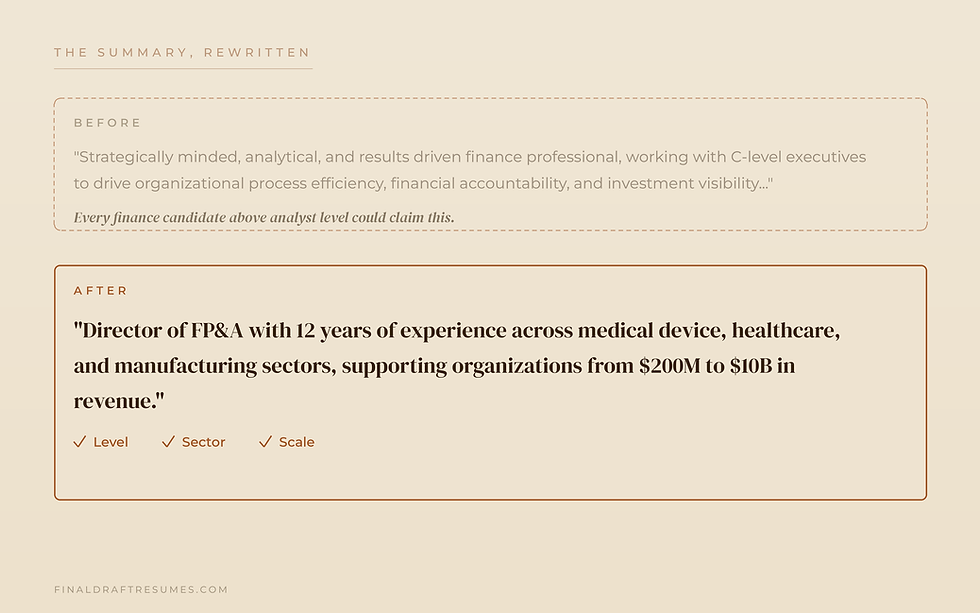
Your Professional Summary: Rework this pitch to lead with the most critical skill they mention.
Your Skills Section: Reorder your skills list to put the most relevant ones at the top. Use their keywords.
Your Work History: Edit bullet points to showcase experiences that directly answer the new role's responsibilities.
Your Top Resume Questions, Answered
Let's cut through the noise. When it comes to resumes, there’s a ton of conflicting advice out there. Here are straight answers to the most common questions from job seekers.
How Long Should My Resume Be?
For most professionals, one page is the gold standard. A resume is a high-impact snapshot, not your life story.
If you’re a seasoned pro with over 10-15 years of highly relevant experience, two pages is acceptable. But never go beyond that. Forcing yourself to be brief makes you focus on your biggest wins.
Should I Use a Summary or an Objective?
Ditch the objective. Always go with a professional summary.
An objective talks about what you want. Recruiters don’t care about that. They care about what you can do for them.
A great summary is a 2-3 sentence elevator pitch at the top of your resume. It immediately tells them who you are, what you’re great at, and what you’ve accomplished, tailored to the job.
How Do I Handle a Work History Gap?
You don’t—at least not on your resume. Your resume is a marketing document designed to showcase your strengths, not draw attention to time off. Focus on what you did accomplish.
Be ready to talk about it in the interview, of course. A simple, honest, and positive explanation is all that's needed if they ask.
Does My Resume’s Purpose Change for Different Industries?
The core purpose is always the same: get you the interview. But the how absolutely changes. The style and content will look completely different from one field to the next.
A graphic designer’s resume needs to be a work of art itself. A lawyer's needs to be conservative, dense with facts, and impeccably professional.
A software engineer's resume will highlight technical projects. A salesperson’s will be all about hitting quotas and revenue growth.
Always do your homework. Research the standards for your target industry and make sure your resume speaks their language.
Crafting a resume that actually gets results is a specialized skill. At Final Draft Resumes, we blend years of hiring expertise with proven writing strategies to build documents that sail past the bots and grab the attention of real people. If you're ready to get noticed, let's build your perfect resume together. Learn more about our resume writing services.


Comments