Finding Professional Resume Writing Services Near Me That Actually Work
- Alex Khamis

- Dec 12, 2025
- 8 min read
It's a habit, right? Need a pro, you search "near me." But for a resume writer, that instinct can backfire. It traps you in a tiny pool of local options.
Let's be blunt: the best writer for you isn't defined by a zip code. The expert who truly gets your industry could be three states away.
Rethinking the 'Near Me' Search for Resume Writers
Here’s a hard truth from years in the hiring trenches: proximity doesn't equal expertise. A local writer might be great for general resumes.
But do they know the specific metrics that matter for a Senior Product Manager in SaaS? Probably not.
Your search needs to be laser-focused on industry specialization. A remote writer with a track record for landing marketing execs interviews is a better bet than a local generalist you can meet for coffee.
Besides, the whole process is handled online now anyway.
Why Industry Knowledge Trumps Location
Hiring managers and their robot gatekeepers—Applicant Tracking Systems (ATS)—scan for specific keywords. They look for achievements and acronyms relevant to your field.
A writer who isn't deep in your industry won't even know what those are. This is a deal-breaker.
Think about it this way:
An aerospace engineering resume needs to mention things like AS9100 compliance and specific project management methods.
A non-profit resume has to show real numbers in donor relations, grant wins, and campaign ROI.
A software developer's resume is dead on arrival without a detailed tech stack and project outcomes.
A generalist writer can't fake this. Their work gets spotted and tossed immediately. That's why you need a strategic approach to 'near me' searches for local experts. Broaden your search.
The professional resume writing market was valued at around $2.31 billion globally in 2024. This boom means your options are huge and not limited by geography.
The goal isn't just to get a resume; it's to get interviews. That requires a writer who speaks your industry's language, no matter their location.
When you expand your search, you'll find top-tier, specialized talent. A good starting point is this list of the top 10 resume writers in North America.
Local vs. Remote Resume Writer Showdown
Still on the fence? It's often a choice between a local meeting and specialized expertise. Here’s a quick breakdown to make it simple.
Description
Factor | Local Writer | Remote Specialist |
|---|---|---|
Industry Expertise | Often a generalist. May lack deep knowledge of your specific field. | Typically an expert in a niche like tech, finance, or healthcare. |
Access to Talent | Limited to a small pool of writers within driving distance. | Access to the best writers across the country or even globally. |
Convenience | Offers in-person meetings, which some people prefer. | The process is handled efficiently via phone, email, and video calls. |
ATS Optimization | Knowledge can be hit-or-miss. Depends on their experience. | Specialists are usually up-to-date on the latest ATS trends for their industry. |
Cost | Can vary widely. Not always cheaper. | Often provides better value due to specialized, high-impact results. |
The idea of a local partner is nice. But the modern job search demands deep, industry-specific knowledge. A remote specialist is almost always better equipped to deliver that.
How to Spot a Pro From a Pretender
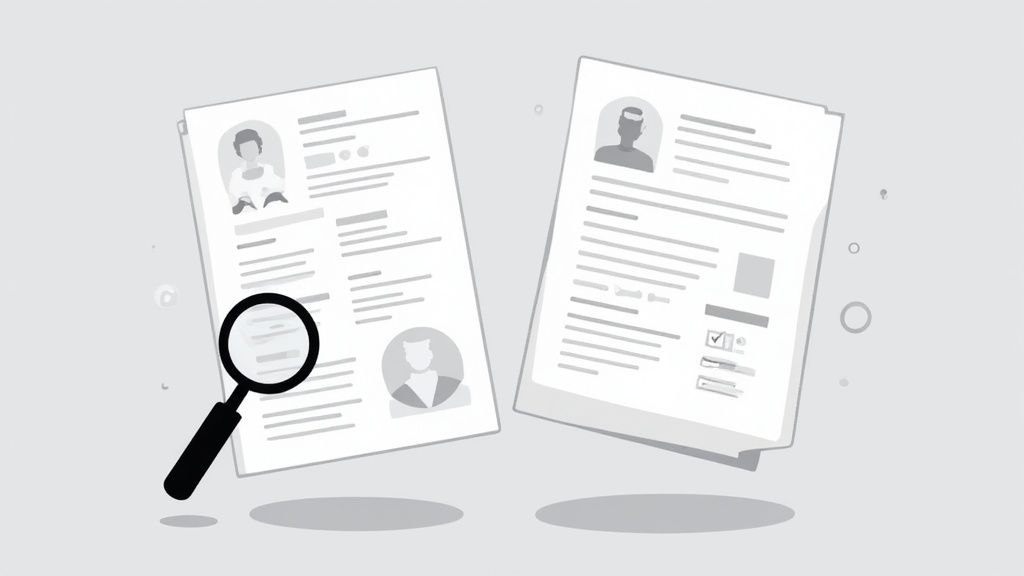
The internet is flooded with "resume experts." Your real challenge is telling a career strategist from a glorified typist using a template.
The difference costs you money and career opportunities.
A true pro has a portfolio showing strategic thinking, not just pretty designs. Do their samples show quantified achievements? Or does every resume look the same?
If it's the latter, you've found a resume mill.
The Template Trap and Resume Mills
Let's be clear: a generic template is a massive red flag. Hiring managers have seen them all. They instantly signal a lack of effort and originality.
Resume mills churn out these documents. They do nothing to capture your unique value. We see this all the time, which is why Etsy resume templates fall short.
A real pro focuses on substance, not just style. To know what to look for, understand the hard and fast rules for writing an effective CV.
With about 75% of recruiters using Applicant Tracking Systems (ATS), optimization isn't just a buzzword. It's survival. This demand has pushed 42% of providers to use AI tools, separating modern experts from the outdated.
A quality writer isn’t selling you a document; they’re selling you a strategy. Their job is to turn your career history into a marketing tool that gets you interviews.
Key Questions to Ask a Potential Writer
During a consultation, your goal is to gauge their expertise. Skip the fluff. Get straight to what matters.
Ask them directly:
"How do you get information about my achievements? A simple form isn't enough."
"Walk me through how you'd tailor my resume for this specific job I'm targeting."
"What's your exact process for beating Applicant Tracking Systems?"
"Do you have direct experience writing for my industry and seniority level?"
Their answers tell you everything. You'll know if they're a strategic partner or just a document preparer. A pro will speak confidently about crafting a resume that drives results.
Vetting Writers Like a Hiring Manager
You have a shortlist. Now, look past the slick websites. It's time to put on your hiring manager hat and figure out who can actually deliver.
A flashy website is easy. A resume that gets results? That takes real skill. You're looking for a strategist, not just a designer.
Analyzing Before-and-After Samples
The proof is in the work. When you see before-and-after samples, ignore the cosmetic changes for a second. A new font is just window dressing.
You want to see a total transformation of the content. A great writer finds your biggest wins, quantifies them, and turns duties into achievements.
Here’s what to look for in their samples:
Real Numbers: Did they add hard data? "Managed a team" is noise. "Led a 12-person team to increase sales by 22%" gets interviews.
Keyword Optimization: Does the "after" version speak your industry's language? Look for jargon and skills an ATS would flag.
A Clear Story: Does the new resume tell a story? It should position the candidate for their target role, not just list old jobs.
If the main difference is just formatting, that’s a huge red flag.
A resume's power comes from its content. A great writer uncovers achievements you overlooked, turning vague duties into concrete, interview-worthy points.
Reading Between the Lines of Testimonials
Testimonials can be gold, but you have to know how to read them. "They were great to work with!" is nice, but it tells you nothing about results.
Hunt for reviews that mention specifics. Did the client get more interviews? Land a job in a new industry? Negotiate a higher salary?
Those details signal a writer who delivers a real return on investment. This guide on how to choose the best resume writing service in 2025 offers more tips.
The Initial Consultation Call
Think of this call as you interviewing them. This is your chance to assess their expertise and process.
A true professional will spend most of the time asking you sharp, insightful questions. They'll want to know your goals, challenges, and proudest accomplishments.
If the writer spends the whole call on a hard sell without digging into your story, walk away. They see you as a transaction, not a client.
Understanding What a Quality Resume Really Costs
Let’s be direct: you get what you pay for. A $99 resume service delivers a $99 result. That usually means a generic template that goes straight to the trash.
If you're serious about your career, see this as an investment.
The price reflects time, expertise, and one-on-one strategy. It’s not about typing. It's hours of consultation, industry research, and optimizing every word for humans and robots.
This process chart breaks down the core stages a true pro follows.
Each step—review, analysis, interview—requires significant time from a skilled writer. That’s what you’re paying for.
Breaking Down the Costs
Pricing is usually tiered by career level, for good reason. The strategy for an entry-level professional is worlds away from what a C-suite executive needs.
Entry-Level (Under 2 years): Expect to pay $300 - $600. The goal is showcasing potential and education to get your foot in the door.
Mid-Career Professional: Prices typically range from $600 - $1,200. This involves framing your career growth and positioning you for leadership.
Executive & C-Suite: These services can cost $1,200 - $3,000+. It’s a deep dive into executive branding and high-impact accomplishments.
A cheaper service almost always skips the most critical step: the strategy session. Without a real conversation, a writer can't capture your unique story. They're just filling in a template.
That higher cost covers deep industry expertise, advanced ATS knowledge, and the skill to craft a narrative that justifies a six-figure salary. Explore our professional resume writing packages to see what a comprehensive service includes.
What the Collaborative Process Should Look Like

Hiring a top-tier writer isn't a hands-off process. If a service promises you can just email your old resume and wait for magic, run. The best results come from a partnership.
Let's be blunt: no one knows your career better than you. A great writer translates your experience into a powerful marketing document. But they need the right raw materials.
A detailed questionnaire or a deep-dive strategy call is the bare minimum. If a writer isn't ready to invest at least 60-90 minutes getting to know you, they’re just guessing.
Your Role in the Process
Think of yourself as the subject matter expert on you. The writer is the communications expert. Success requires both of you to be engaged.
Before your first call, get ready to talk about:
Specific Wins: Don't just list job duties. Have stories about projects you led, problems you solved, and targets you crushed. Bring numbers.
Target Roles: Bring 2-3 job descriptions for roles you actually want. This gives the writer a clear roadmap for tailoring.
Career Context: Be ready to explain your career path, including gaps or pivots. A good writer knows how to frame these strategically.
A writer can only work with the information you provide. Vague input leads to a vague resume. The more detail you offer, the sharper the final document will be.
Handling Drafts and Revisions
Once you get that first draft, your job isn't done. This is your chance to refine the narrative. Don't just scan for typos.
Read it from a hiring manager's perspective. Does this capture your skills? Is the tone right for your industry?
Provide specific, actionable feedback. Instead of, "I don't like this," try, "This bullet point is missing the key result, which was a 15% cost reduction." That is how a good resume becomes great.
Your Top Resume Service Questions, Answered
Even after doing your homework, a few questions are probably still bouncing around in your head. Let's clear them up with some straight answers.
Is Using a Resume Service Cheating?
Let's be blunt: absolutely not.
An executive doesn't write their own speeches. A top actor doesn't direct their own films. Hiring an expert to frame your career story is a smart, strategic move.
A great writer translates your skills into the language recruiters understand. They also know how to get your resume past the robots. Our guide on how Applicant Tracking Systems work explains why this is so crucial.
How Long Does the Process Usually Take?
Be very skeptical of anyone promising a resume in 24 hours. A quality, collaborative process takes time.
For most legit services, expect the entire journey to take 5 to 10 business days. This isn't something you can rush.
This timeline allows for:
A deep-dive strategy call (60-90 minutes).
Thorough research and writing by a professional.
At least one round of revisions based on your feedback.
Rushing this almost always results in a generic document.
A professional resume is an investment. The goal isn't just to get a resume fast; it's to get a resume that works. The time invested upfront pays off.
Do I Still Need a Cover Letter?
Yes. You absolutely do.
Some applications list it as "optional." This is a test. A well-crafted cover letter is your best chance to connect the dots for a hiring manager.
A strong cover letter shows you've done your research. It explains why your skills are the perfect solution to their problems. It often moves you from the "maybe" pile to "must interview."
Ready to invest in a resume that opens doors? The experts at Final Draft Resumes combine years of hiring experience with proven writing strategies to craft documents that get results. Learn more about our personalized resume writing process.


Comments