What Is Professional Development and Why It Matters Now
- Alex Khamis

- Nov 7, 2025
- 10 min read
Professional development isn't about sitting through a boring seminar just to check a box for HR. It's the ongoing process of learning and adapting to keep your skills sharp. It's how your career avoids hitting a dead end.
Professional Development Is More Than Just Training
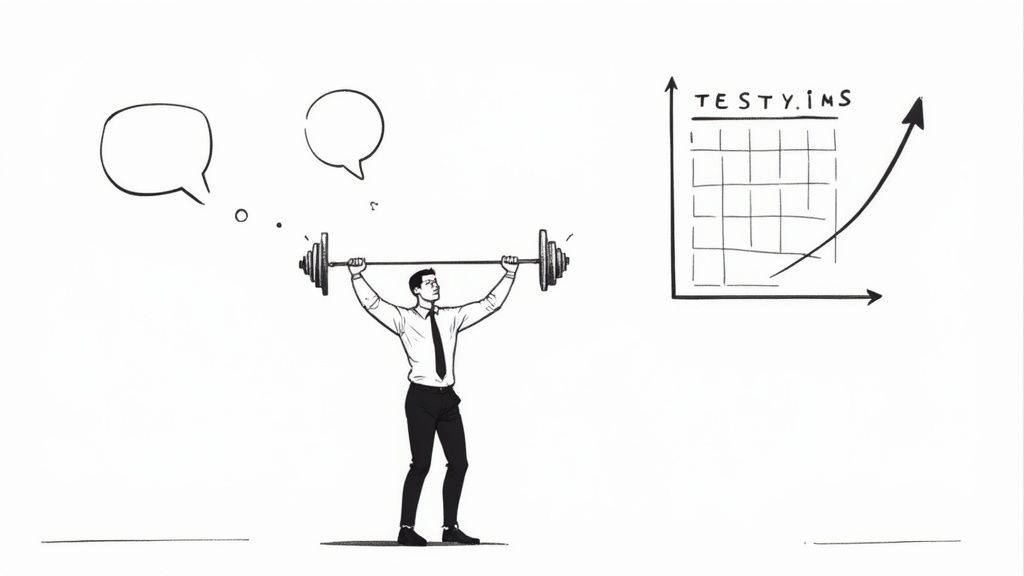
Think of it less like a one-time class and more like a gym routine for your career. It demands consistent effort to stay strong and relevant.
In a world where tech reshapes entire jobs, standing still is the fastest way to become obsolete. What got you hired five years ago probably isn’t enough to get you promoted today.
What It Actually Looks Like
Real professional development is a mix of efforts, not a single activity. It's easy to confuse short-term training with the long-term growth that moves your career forward. For a great breakdown, see these resources on understanding the difference between employee training and development.
To give you a better idea, here's a quick look at what professional development actually covers.
Core Components of Professional Development
Component | What It Is | Example |
|---|---|---|
Skill Enhancement | Acquiring specific skills to improve job performance. | Taking a workshop on a new project management software like Asana or learning advanced data analysis. |
Formal Education | Pursuing structured programs for deep knowledge. | Earning an MBA, a Ph.D., or a specialized certification like a PMP for project managers. |
Mentorship & Coaching | Learning through guidance from an experienced pro. | Having a senior leader guide your career path and help you navigate office politics and challenges. |
Self-Directed Learning | Taking the initiative to learn on your own. | Teaching yourself a new coding language through online tutorials or mastering a new marketing platform. |
Experiential Learning | Gaining knowledge through hands-on experience. | Leading a challenging new project or taking on a stretch assignment in another department. |
This isn't about collecting certificates to feel busy. It’s about strategically picking up skills that solve bigger problems, add more value, and make you indispensable.
It’s the difference between being a task-doer and a leader. For example, learning to present data better through a public speaking course boosts your influence. You can get started with our guide on how to improve communication skills.
The harsh reality is most professionals aren't prepared for the future. Staying competitive requires a proactive, not reactive, approach to your own skill development.
Worryingly, a recent ADP survey found only about 24% of workers feel confident they have the skills for future jobs. This gap is a massive opportunity for anyone willing to invest in themselves.
Why You Cannot Afford to Ignore Professional Development
Let’s be direct. Ignoring your professional growth isn't just lazy—it's a massive career risk. In a competitive market, standing still means you're actively falling behind. Your skills have a shelf life.
From a hiring manager's view, the choice between two qualified candidates often comes down to one question. Who is actively trying to get better? The resume showing recent certifications almost always wins.
The Real Cost of Stagnation
Relying on old knowledge is a gamble you will eventually lose. As technology makes certain skills obsolete, the people who stay employed are the ones learning new things.
This isn't just a "nice-to-have" anymore. It's a fundamental requirement for career survival. The consequences of not investing in yourself are stark:
Becoming Obsolete: Your core skills may no longer be in demand, putting your role at risk of redundancy.
Lower Earning Potential: Without new skills, you lose leverage for salary negotiations or promotions.
Reduced Job Security: When a company adapts, you become the first person considered for layoffs.
Career Plateaus: You get stuck in the same role for years while ambitious colleagues move right past you.
The harsh truth is that loyalty to your past skills won't protect your future. The market rewards those who adapt, not those who wait to be told what to do. Your career is your business—run it like one.
Adapting to a New Job Market
The labor market is going through a massive shift. The World Economic Forum projects that while 92 million jobs will be displaced this decade, 170 million new ones will be created. This gap highlights the urgent need to upskill just to stay in the game.
But this isn't just about avoiding unemployment. It’s about seizing a huge opportunity. The professionals who commit to continuous development can claim the best of these new, higher-paying roles. For a closer look, see the latest job search statistics for 2024.
Exploring Different Types of Professional Development
Professional development comes in all shapes and sizes, and most don't involve a stuffy classroom. The right path depends on your goals, your budget, and how you learn best. There’s no single “best” way.
The smartest professionals mix and match methods to build a well-rounded skill set. A formal course might teach you theory, but a hands-on project proves you can actually do the work. It’s about building capabilities, not just credentials.
Formal Education And Certifications
This is the most traditional route. Think university degrees, industry certifications, or intensive bootcamps. These are great for making a big career pivot or mastering a complex skill from the ground up.
For example, a project manager might pursue a PMP certification to validate their expertise. Similarly, a marketer could enroll in a digital marketing bootcamp to master SEO, PPC, and analytics in a structured environment. These formal credentials are a powerful signal.
This path is often expensive and time-consuming. It’s a major investment, so be certain the credential has a clear return for your career goals. Don't just collect acronyms for your LinkedIn profile.
Workshops, Seminars, And Conferences
These are shorter, more focused learning opportunities. A weekend workshop on public speaking or a three-day industry conference can deliver concentrated knowledge and valuable networking opportunities. They’re perfect for staying current with fast-moving industry trends.
Honestly, the real value here often comes from the connections you make. Hearing how a peer solved a problem you’re wrestling with can be more valuable than any keynote speech.
On-The-Job And Self-Directed Learning
This is where the most practical growth happens. It’s about actively seeking challenges in your current role or taking the initiative to learn on your own time. This category includes:
Mentorship: Finding an experienced pro for guidance and candid advice is priceless. This can accelerate your growth faster than almost any course.
Stretch Assignments: Volunteer for that project outside your comfort zone. This is how you gain real-world experience and show leadership you’re ambitious.
Self-Study: This is about taking ownership. Use online platforms, books, or podcasts to teach yourself something new. Maybe you build a personal website to learn basic coding. These efforts build powerful, tangible skills. For more ideas, check out these hard skills examples on a resume that actually get noticed.
To help you decide which path makes sense, here’s a quick breakdown of common development methods.
Comparing Professional Development Methods
This table offers a snapshot of common development methods to help you choose the right one for your goals, budget, and schedule.
Method | Best For | Time Commitment | Typical Cost |
|---|---|---|---|
Formal Education | Deep knowledge, career pivots, foundational skills | High (Months to years) | High ($$$$) |
Certifications | Validating specific expertise, industry recognition | Medium (Weeks to months) | Medium ($$$) |
Conferences | Networking, staying current with industry trends | Low (1-3 days) | Medium ($$-$$$) |
Workshops | Learning a specific, targeted skill quickly | Low (Hours to days) | Low-Medium ($-$$) |
Mentorship | Personalized guidance, career strategy | Medium (Ongoing) | Low to Free |
Self-Study | Flexibility, learning at your own pace | Varies (Ongoing) | Low to Free |
Ultimately, the best approach is a blended one. You might take a certification course to get the credentials, then find a mentor to help you apply that knowledge effectively in the real world. The key is to be intentional.
Creating a Professional Development Plan That Actually Works
Let’s be honest: a goal without a plan is just a wish. Most development efforts fail because there’s no clear, simple roadmap to follow. A dusty, complex document in a forgotten folder is useless.
The point is to build a practical guide you’ll actually look at. This isn't about filling spreadsheets with meaningless corporate buzzwords. It's about getting real with yourself, focusing your energy, and taking small, consistent steps.
This infographic breaks down the common pathways people take for professional growth, from formal degrees to hands-on mentoring.As you can see, growth isn't a single path. It's a blend of different methods you choose to fit your specific career goals.
Step 1 Start With an Honest Skills Audit
Before you map out your destination, you need to know where you're starting. This means taking a brutally honest look at your current skills—the good, the bad, and the obsolete.
Don't just list your job duties. Map your skills against the job you want next. What are the non-negotiable requirements for that role? Where are your biggest gaps? Be specific. "Get better at communication" is useless. "Learn to present a compelling business case to senior leadership" is a real target.
A self-assessment isn't about beating yourself up. It's a strategic exercise to find the single most impactful skill you can learn right now that will open the most doors for your future.
Step 2 Set a Small Number of Realistic Goals
Once you've pinpointed your gaps, pick just one or two key areas to focus on for the next six months. Ambitious people try to do too much at once, which is a fast track to burnout and zero progress.
Here’s a simple framework to make those goals actionable:
Specific Skill: What exact skill will you learn? (e.g., Advanced financial modeling in Excel).
Learning Resource: How will you learn it? (e.g., A specific online course and two relevant books).
Application Project: How will you prove you've learned it? (e.g., Build a financial model for an upcoming team project).
Deadline: When will you have this done? (e.g., End of Q3).
This structure transforms a fuzzy wish into a concrete plan. It also forces you to think about how you’ll apply your new skills in the real world, which is what employers actually care about.
The demand for this kind of upskilling is exploding. The professional development market is projected to grow at about 8% annually through 2033, driven by the need for new competencies. You can explore more data on this trend at Market Report Analytics. Identifying key leadership competencies is a great place to start.
How to Get Your Employer to Pay for Your Growth
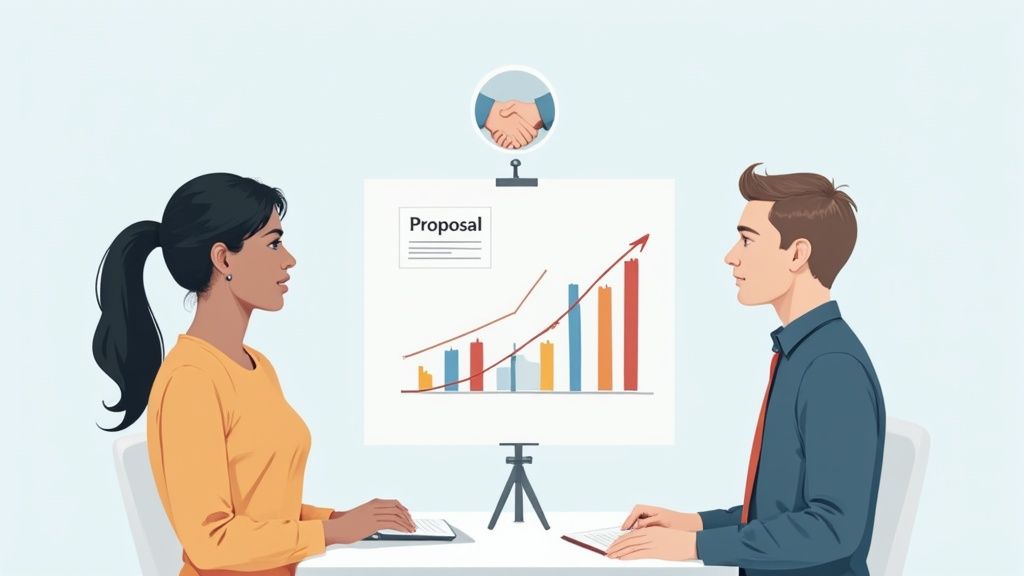
Most companies have a budget for professional development, but a surprising amount goes untouched. Why? People don't know how to ask, or they ask the wrong way.
Getting your company to invest in you isn't about what you want. It's about building a solid business case that shows them what’s in it for them. Think like your manager: they approve expenses that deliver a clear return on investment (ROI).
Build Your Business Case
Before you meet with your manager, do your homework. A vague request to "take a course" will get you a vague "no." You have to be specific and strategic.
Your proposal must directly connect your training to a company goal. Frame it this way:
Identify a Problem: Pinpoint a team pain point. "Our projects keep getting delayed because we lack a formal project management process."
Propose a Solution: This is your chosen training. "If I get a PMP certification, I can implement a system to improve our project efficiency by an estimated 15%."
Show the ROI: Connect it to the bottom line. "This will save us money on overtime, help us deliver client work on schedule, and improve satisfaction."
Your manager is thinking about their budget and performance. Your request has to make their job easier, not just add an expense. Show them how your growth solves one of their problems.
Often, the reward for this kind of development is a promotion. Understanding what constitutes a good promotion salary increase can help you advocate for fair compensation. Perfecting this request is a negotiation, and you can find more tips in our guide to salary negotiation.
Answering Your Professional Development Questions
Alright, let's tackle the big questions. No fluff, just straight answers to the real-world obstacles—time, money, and proving it’s all worth it.
The goal here is to clear up any hesitation you might have. Think of this as the practical advice you need to finally get moving on your own growth.
How Do I Find Time with a Busy Schedule?
First, stop thinking you need to find entire days to learn. That's a recipe for failure. The secret is "micro-learning"—finding small, consistent pockets of time. Consistency beats cramming.
You can make surprising progress in the margins of your day:
Swap out music for an industry podcast on your commute.
Use your lunch break to watch a 15-minute tutorial on YouTube.
Read one relevant article with your morning coffee.
It’s about small, repeatable habits. Block out two or three hours on your calendar each week and treat that time like a can't-miss meeting with your most important client: yourself.
Is Another Degree the Only Way to Advance?
Absolutely not. While a degree can be valuable, it's also a slow and incredibly expensive path. The modern playbook is about acquiring skills, not just credentials.
High-demand certifications, weekend workshops, and hands-on projects often give you a faster, more direct route to a promotion. Employers are desperate for people with demonstrated, practical skills.
From a hiring manager's perspective, a candidate who just wrapped up a relevant three-month certification is often more attractive than someone with a general degree from five years ago. It shows current, targeted ambition.
How Can I Measure the ROI of My Development?
You have to track concrete outcomes. Before you start any training, define what success looks like. Is it a promotion? A 15% salary bump? The ability to lead a new type of project?
Other real-world ways to measure the impact include:
New Skills for Your Resume: Can you add tangible, in-demand abilities to your professional profile?
Successful Project Completion: Did you use what you learned to deliver a better result on a recent project?
Specific Positive Feedback: Are you getting direct recognition from your manager or senior leaders?
And if you’re building a case for your boss to fund it? Frame the ROI in their terms. Talk about how your new skills will increase team efficiency, improve work quality, or open the door for new revenue.
At Final Draft Resumes, we specialize in helping you showcase the value of your professional development. A powerful resume doesn't just list your past jobs; it tells a compelling story of your growth, skills, and strategic value. If you're ready to translate your hard-earned expertise into career opportunities, learn more about how our expert resume writing services can help.
Author

Alex Khamis is a Certified Professional Resume Writer and Managing Partner at Final Draft Resumes and Resumatic.
He has over 15 years of experience across career services and business communications. He's helped people land roles at companies like The Walt Disney Corporation and Microsoft.
Comments